

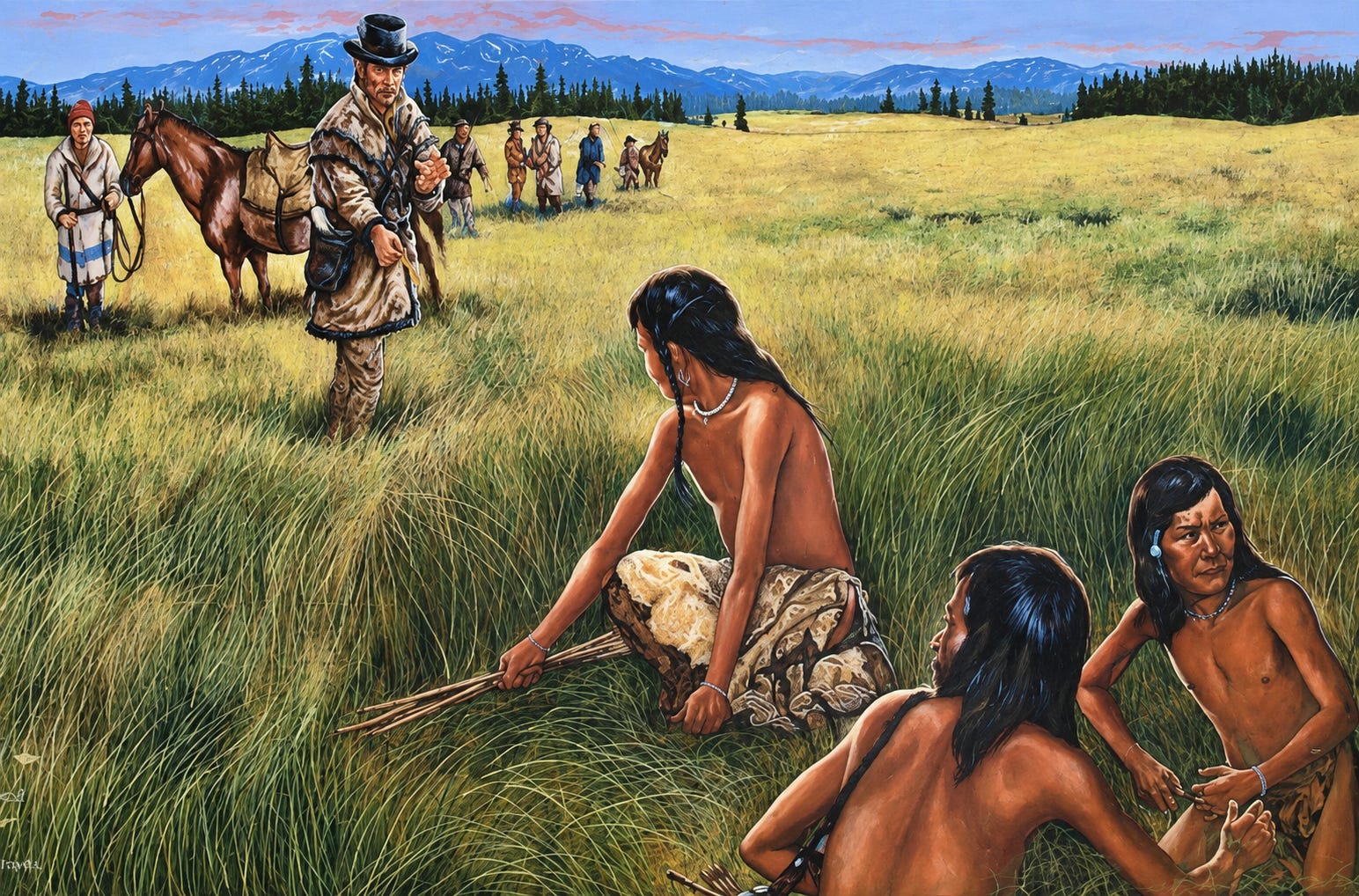
There are a lot of ways to tell the story of the Lewis and Clark Expedition. There is the story of exploration, the story of science and discovery, and the story of rivers and mountains and maps that were being drawn as the future western United States was being documented from the American perspective for the first time. Importantly there are also the stories of the people who were already living in this country when the Corps of Discovery arrived. Among those stories, the history of the Nez Perce, or Nimiipuu, is one of the most remarkable.
The Nez Perce call themselves Nimiipuu, “The People,” and in 1805 they were a powerful and influential people of the Northwest Plateau. Their homeland stretched across what is now north-central Idaho, southeastern Washington, northeastern Oregon, and parts of Montana and Canada, centered on the Clearwater and middle Snake rivers. They moved with the seasons, following salmon runs, gathering camas and other roots, hunting throughout the mountains and valleys, and traveling east over the passes into the Plains for buffalo. The horse, adopted generations before Lewis and Clark arrived, had greatly expanded their mobility and their connections with neighboring peoples. With thousands of people living in dozens of villages, the Nez Perce were deeply involved in trade, diplomacy and intertribal affairs. When the Corps of Discovery entered this country in 1805, it was not entering an empty wilderness. It was entering the homeland of a people who knew the country intimately and had their own established relationships, interests and power.
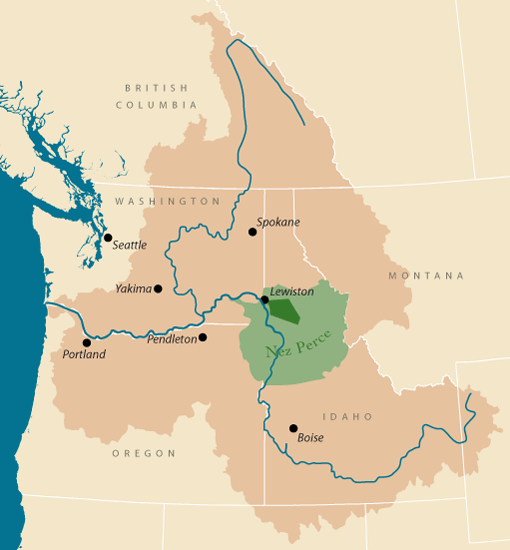
The first contact between the Nimiipuu and the Lewis and Clark Expedition came in September 1805, as the Corps was still moving west. After traveling north along the Bitterroot River Valley, the Expedition made a sharp turn toward the mountains and the route that would take it across the Bitterroots. Near present-day Travelers’ Rest, John Colter encountered the Nimiipuu on Lolo Creek. It was the beginning of a relationship that would last longer than the Expedition’s contact with any other Native nation. Over the months that followed, the Nez Perce would help the Corps cross the mountains, provide food when the men were exhausted and hungry, teach them how to build dugout canoes, care for their horses and provide guides for the journey down the Clearwater and Snake rivers. What began as an uncertain encounter between strangers would become one of the most consequential relationships of the entire Expedition.
The entertwined history would continue through the Expedition’s return journey in 1806. And finally more than seven decades later, the Nez Perce would again be moving east across much of the same country, but under very different circumstances. This time they would not be guides and hosts helping travelers reach the Pacific. They would be trying to escape the United States Army.
That is the story I want to explore in this series of Undaunted Travel. Over the next three weeks, we will follow the Nez Perce story across more than 70 years of American history. The first story begins in 1805, when Lewis and Clark encountered the Nez Perce at a moment when the Expedition was in serious trouble. The second week will pick up the story during the return journey in 1806, when the Corps discovered that crossing the Bitterroot Mountains was not going to be any easier on the way home. The third week will move forward to 1877, when the Nez Perce flight became one of the most extraordinary episodes in the history of the American West. That final part of the story also provides the basis for a remarkable journey along the Nez Perce National Historic Trail.
The trail offers something different for travelers interested in history. The story is not confined to one battlefield, one monument or one historic building. It unfolds across a landscape of rivers, mountains, valleys and prairies. To understand what happened to the Nez Perce, you have to move through the country where the events actually took place. But before we get to 1877, it is worth going back to the beginning and considering what happened when Lewis and Clark first came into Nez Perce country.
September 1805
By September 1805, the Lewis and Clark Expedition had been traveling for more than a year, and the easy part, if there ever was one, was behind them. The Corps had crossed the Great Plains, traveled up the Missouri, reached the Rocky Mountains and begun the difficult transition into the country beyond them.
Thomas Jefferson had hoped that the rivers might provide a practical route west. The absence of salmon in the Bitterroot River, however, suggested that something substantial blocked the way. The Expedition would have to cross the mountains on horse and foot, and what followed was one of the most difficult stretches of the entire journey.
The Corps spent eleven days crossing the Bitterroot Mountains. The trail became increasingly difficult as the men encountered heavily forested country, early snow and bitter cold. Game was scarce, and the men could no longer depend on the quantities of fresh meat that had helped sustain them on the plains. Eventually they were forced to kill and eat three of their horses. By the time they reached the other side of the mountains, the men were physically exhausted and approaching starvation.
It is easy, more than two centuries later, to look at the meeting of the two groups as though it were inevitable. It was not. The Nez Perce had no reason to know who these people were or what they intended. They had never seen people quite like them. There were men with pale skin and blue eyes, men with hair covering their faces and bodies, unfamiliar weapons and, among the group, York, the Black man who traveled with the expedition. There were also the Shoshone people who had accompanied Lewis and Clark.
From the perspective of the Nez Perce, these were strangers who had suddenly appeared in their country after coming through the mountains. According to the Nez Perce oral tradition, there was serious discussion about whether these people should be killed. The Nez Perce were not a powerless people encountering an expedition that could simply impose its will upon them. They were an important power in the region and occupied a strategic position in the trade networks connecting the interior Northwest with the Pacific Coast and the Northern Plains.
From that perspective, the arrival of a group of armed strangers could reasonably be viewed as a threat. There was, however, another story already present in Nez Perce memory, and that story would become important.
The Story of Watkuese
Watkuese had been captured as a child during an attack by the Blackfeet. She was taken from her people and held as a slave, eventually moving eastward through a series of Native nations. At some point, a white family acquired her. According to the story, they treated her with kindness and respect, and eventually helped her return to her own people.
When Watkuese returned home, she told the Nez Perce about the people who had helped her. She described a race of people who were numerous and powerful and who possessed things she had never seen. The stories were so unfamiliar that some people did not believe her. They had no frame of reference for what she was describing.
Years later, however, word traveled through the Nez Perce communities that strange people had appeared in the mountains. They had pale skin, hair on their faces and bodies, and were accompanied by an unusual collection of people and animals. Watkuese heard about their arrival and recognized them as the people she had encountered during her captivity.
The message attributed to Watkuese was simple: help them. Feed them. Do what you can for them because these were the people who had helped her when she was a slave and had treated her with respect when others had not.
Whatever combination of circumstances ultimately influenced the Nez Perce decision, they chose to help the Expedition. The Corps of Discovery was weak and hungry and the Nez Perce provided food and assistance.
The relationship was not without caution. The Nez Perce were interested in the Expedition’s weapons and material possessions, and they wanted to understand who these strangers were and what they intended to do. That is an important part of the story because it reminds us that this was not simply an encounter between helpless explorers and benevolent hosts. Both sides were trying to understand the other, and the Nez Perce had knowledge of the country that Lewis and Clark desperately needed.
The Clearwater
Once the immediate crisis had passed, the relationship became more practical. The Corps still had to get to the Pacific, and the Nez Perce knew how to travel through this country.
The Expedition made its way toward the Clearwater River, where the explorers faced another problem. The rivers offered the most promising route west, but the Corps needed boats. Lewis and Clark began building canoes using their own methods, but the Nez Perce showed them how to burn out the interior of large logs to make dugout canoes. The technique was well suited to the country and materials around them, and it gave the Corps the boats it needed to continue downstream.
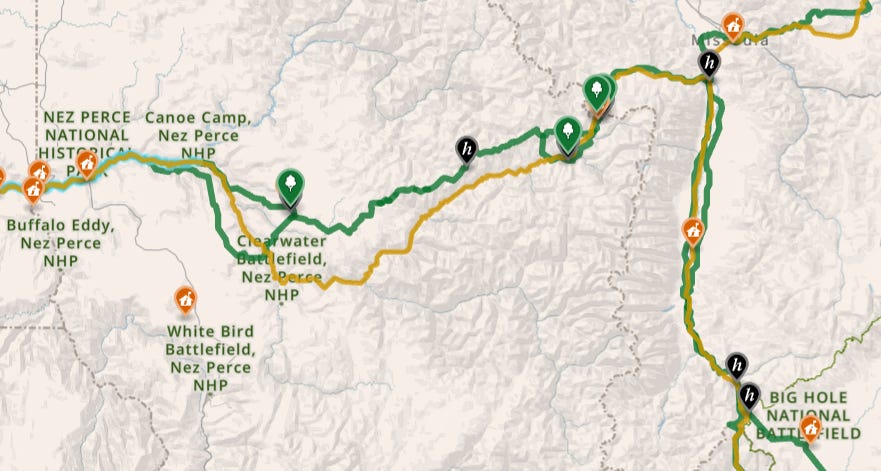
The place where this happened became known as Canoe Camp, near present-day Orofino. It is one of those places along the Lewis and Clark Trail where the story becomes especially tangible. The Expedition had just crossed the Bitterroots under desperate circumstances, and now, beside the Clearwater, the explorers were learning from the people who understood the river and the country around it.
The Nez Perce also agreed to take care of the Expedition’s horses while the Corps continued toward the Pacific. Two Nez Perce accompanied the explorers down the Clearwater and Snake rivers. They helped scout the rapids and introduced the Expedition to other Native communities living along the rivers.
With the help of the Nez Perce, the Expedition continued west toward the Columbia and ultimately the Pacific Ocean.
Next week: The Return — 1806
The Corps of Discovery comes back through Nez Perce country believing it is ready to cross the Bitterroots. The Nez Perce know the country better, and the return journey will reveal just how much the Expedition still has to learn from the people who called these mountains home.
What to See on Your Journey
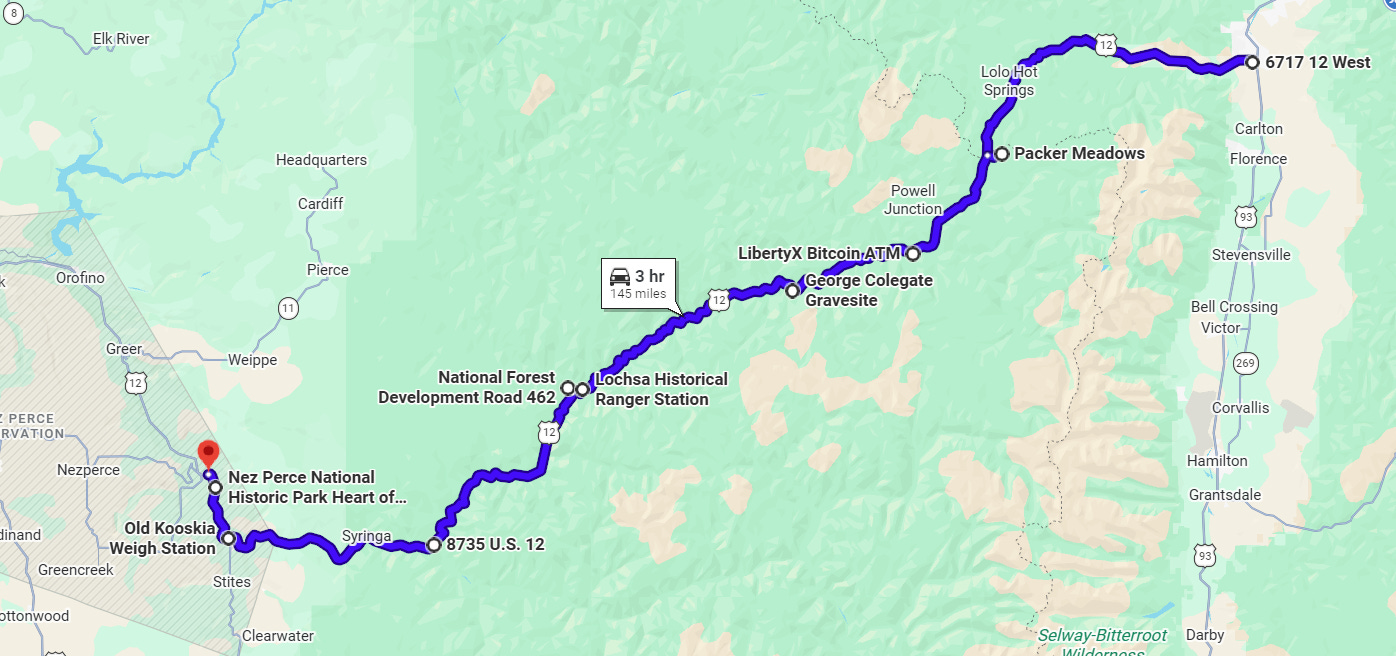
The Lewis and Clark Expedition could not follow today’s US Highway 12 between Lolo, Montana, and Kamiah, Idaho. Instead, the Expedition crossed the Bitterroot Mountains along ridgelines roughly 2,000 feet above the modern highway. Today, travelers can experience this historic landscape from both US 12 and the Lolo Motorway, a primitive road that follows portions of the original route. US 12 follows the Middle Fork Clearwater and Lochsa Rivers through spectacular mountain country, while the Lolo Motorway provides access to many of the remote historic camps and sites along the ridgeline.
Travelers’ Rest State Park
The journey begins at Travelers’ Rest State Park, where the Corps of Discovery camped on both its westbound journey in September 1805 and its return in June–July 1806. Long used as a Native American travel and camping area, Travelers’ Rest is an archaeologically verified Lewis and Clark campsite.
The visitor center interprets the history and cultures of the Bitterroot Salish, Pend d’Oreille, and Nez Perce peoples as well as the Expedition. A 1.7-mile loop trail circles the historic campsite.
Lolo Motorway
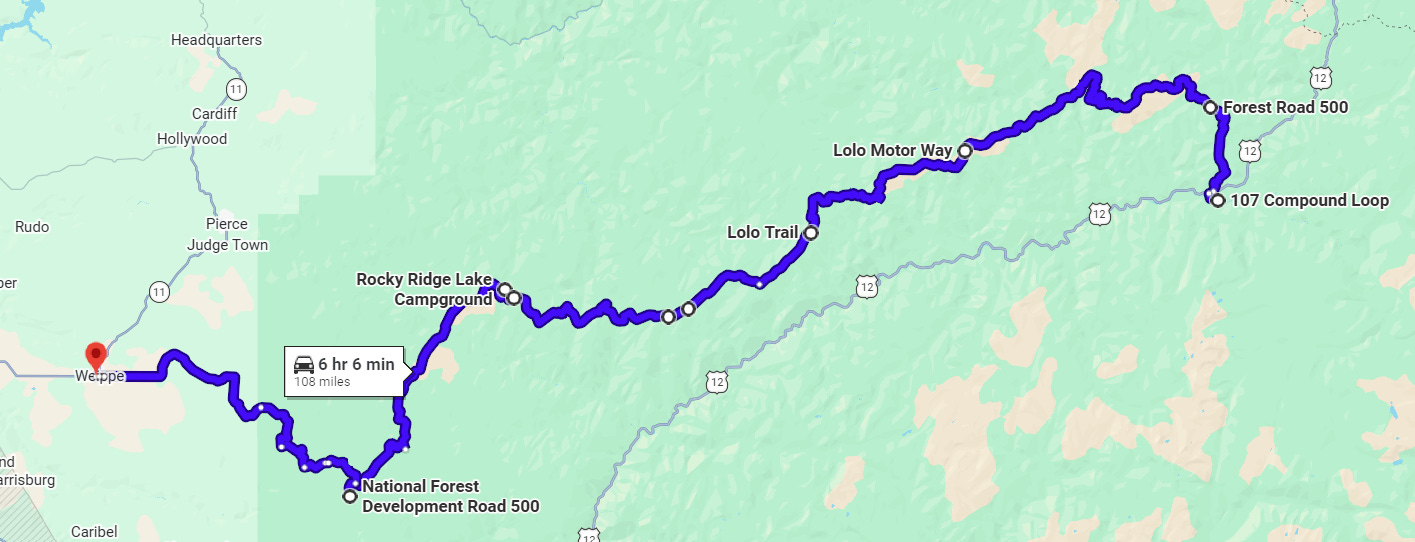
The Lolo Motorway (Forest Service Road 500) follows portions of both the Lewis and Clark National Historic Trail and the Nez Perce National Historic Trail. It is one of the most remote and challenging ways to experience the route. The road is narrow, winding, and primitive, with average speeds of only 5–10 mph. High-clearance vehicles, motorcycles, and ATVs are best suited to the Motorway.
The Motorway is generally accessible from July through October. There is no cell service, and travelers should be prepared for changing conditions, limited emergency access, and rough terrain. Dispersed campsites are available, but visitors must be self-sufficient. Check current Forest Service road conditions before beginning the journey.
Lolo Pass Visitor Center (US 12)
At the Montana–Idaho border, the Lolo Pass Visitor Center interprets both the Lewis and Clark crossing of the Bitterroot Mountains and the 1877 flight of the Nez Perce. The Expedition spent eleven difficult days crossing Lolo Pass in September 1805, facing steep terrain, cold weather, and scarce food. The visitor center also provides maps, trail information, and seasonal recreation information.
Packer Meadows (adjacent to the Visitor Center)
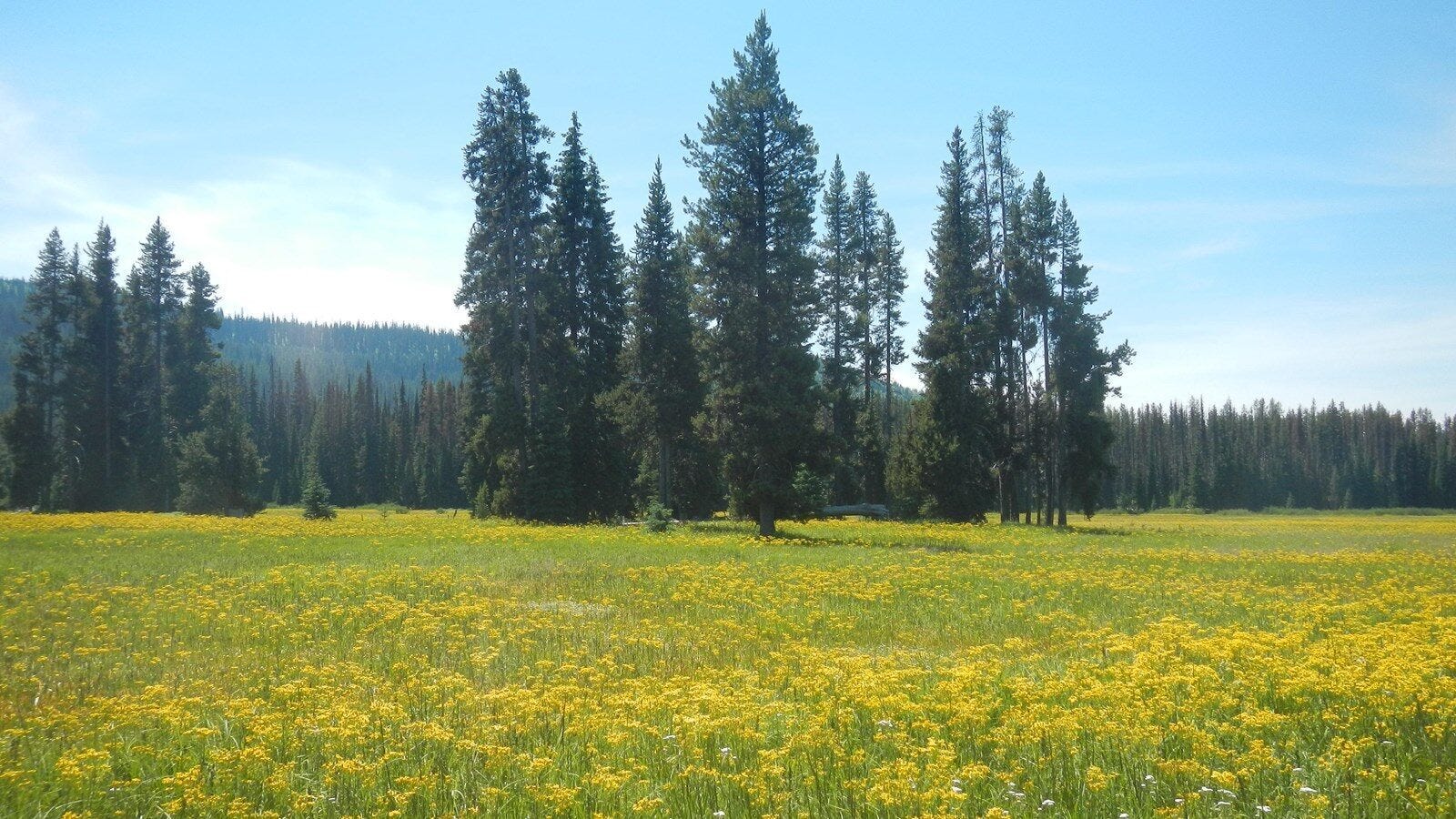
Packer Meadows is a beautiful mountain meadow crossed by the Expedition on both its westbound and return journeys. Clark and other members of the party noted the area’s abundant camas and excellent grazing. The meadow is especially striking when camas is in bloom.
Lochsa Lodge and Powell
Lochsa Lodge provides food, lodging, supplies, and fuel along US 12. Nearby is the Powell Ranger Station, where the Expedition camped on September 14, 1805. A Forest Service campground is also located nearby.
Wendover Ridge
For hikers, Wendover Ridge offers one of the classic Lewis and Clark experiences along the Lochsa. The trail climbs from the river more than 3,500 feet toward K’useyneiskit, the “Road to the Buffalo” and Lolo Trail. The Expedition struggled with steep slopes and fallen timber here in 1805.
The US 12 trailhead is at Wendover Campground. A second access point from the Lolo Motorway lies east of Snowbank Camp. Conditions can be difficult, so hikers should be prepared for a demanding backcountry experience.
13-Mile Camp (Motorway)
Near Powell Junction, 13-Mile Camp is reached by a short signed trail following the historic Lolo Trail. The campsite sits in a small saddle surrounded by beargrass and offers expansive views of the Bitterroot Mountains.
Indian Post Office (Motorway)
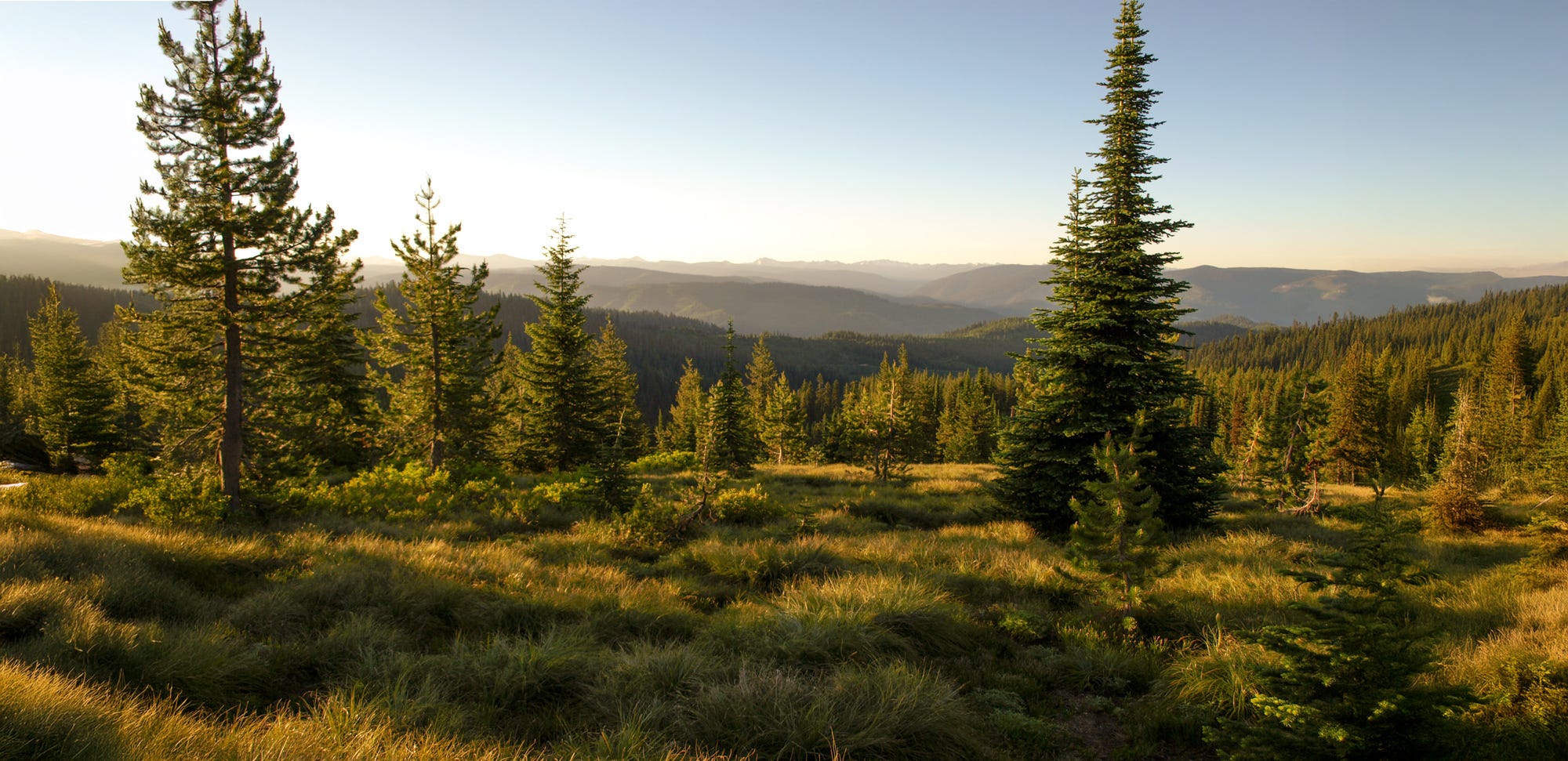
Continuing west on the Lolo Motorway, travelers pass Snowbank, Bears Oil and Roots camps before reaching Indian Post Office, one of the most memorable locations along the route. The site provides a remarkable 360-degree view of the Bitterroot Mountains and is considered sacred by many Native Americans. Ceremonial rock cairns remain here, and a trail leads toward nearby lakes and a restored section of the Nee-Me-Poo Trail.
Smoking Place and Grave Creek (Motorway)
Smoking Place is another important Nez Perce cultural site and Lewis and Clark campsite. A short trail from the Motorway leads to an elevated viewpoint with broad views of the Bitterroot Mountains. Lewis recorded stopping here at the request of the Nez Perce guides to smoke a pipe and admire the mountains.
A short distance farther is Grave Creek, believed to be the location of the Expedition’s “Sinque Hole” camp. The meadow contains several water-filled sinkholes and the grave of a young Nez Perce boy who died here in 1895.
Colgate Licks (US 12)
Colgate Licks offers a short interpretive trail and views of the area’s hot spring licks. Wildlife is frequently encountered here, making it a worthwhile stop for travelers exploring the Motorway.
Lochsa Historical Ranger Station (US 12)
The Lochsa Historical Ranger Station provides interpretation of the Lolo Trail and the history of the Forest Service in the Clearwater, Lochsa, and Selway regions. The site reflects an earlier era when the road ended here and travel farther into the mountains was by foot or mule.
Weippe Prairie and Discovery Center (Idaho Highway 11)
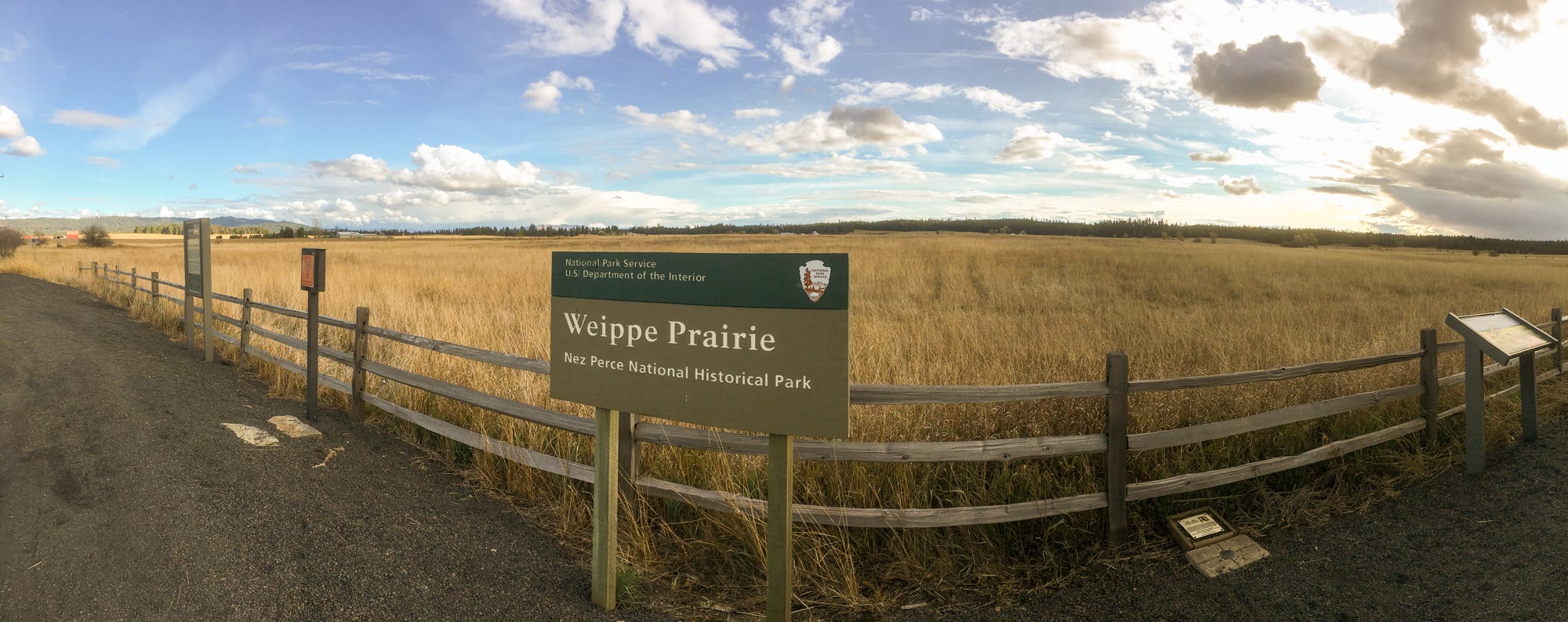
At Weippe Prairie, the Lewis and Clark Expedition first fully encountered the Nez Perce people. The meeting proved critical to the Expedition’s survival and success as the travelers prepared to continue west.
The Weippe Discovery Center interprets this encounter and the history of the Nez Perce people. Exhibits include artifacts, Expedition replicas, wildlife displays, murals, and plants collected and described by Meriwether Lewis.
Canoe Camp (US 12 Orofino)
At Canoe Camp, the Expedition reached a navigable river after crossing the Rocky Mountains. Here, the Corps built five dugout canoes from the large ponderosa pines growing along the Clearwater.
Today, Canoe Camp is managed by Nez Perce National Historical Park and includes a short interpretive trail, restroom, and model dugout canoe. It is an excellent place to pause and experience the landscape where the Expedition began its river journey toward the Pacific.
For additional trip-planning information, visit the Lewis & Clark Trail Experience Trip Inspirations at https://www.lewisandclark.travel/trip-insiprations/.
To learn more about preserving the Historic Lolo Trail Corridor
More Resources
Lewis and Clark Trail News - our bi-weekly newsletter with Trail Happenings
Lewis and Clark Mobile App - take the Trail with you on your mobile device
Lewis & Clark Trail Alliance - learn about the work of the Alliance
Events along the Trail - our calendar of events you may wish to attend
Join The Alliance - Get involved
Additional Resources: Experience Lewis and Clark
We are grateful for the generous support of our corporate and travel partners whose sponsorship helps make this work possible. When planning your travels along the Lewis and Clark Trail, we encourage you to support the businesses and organizations that invest in preserving and sharing these stories—your patronage helps sustain both the trail and the experiences that bring its history to life.

Fun read! Of all the places you mention, Orofino stood out to me. You make it seem like a nice place, but it also works best for my puzzles. I make city names into a word game and tell a little history about places. Weird hobby, I know. But now Orofino, ID is high on my puzzles-to-do list.